The Numbers Don’t Lie – Your Home Is Worth Protecting
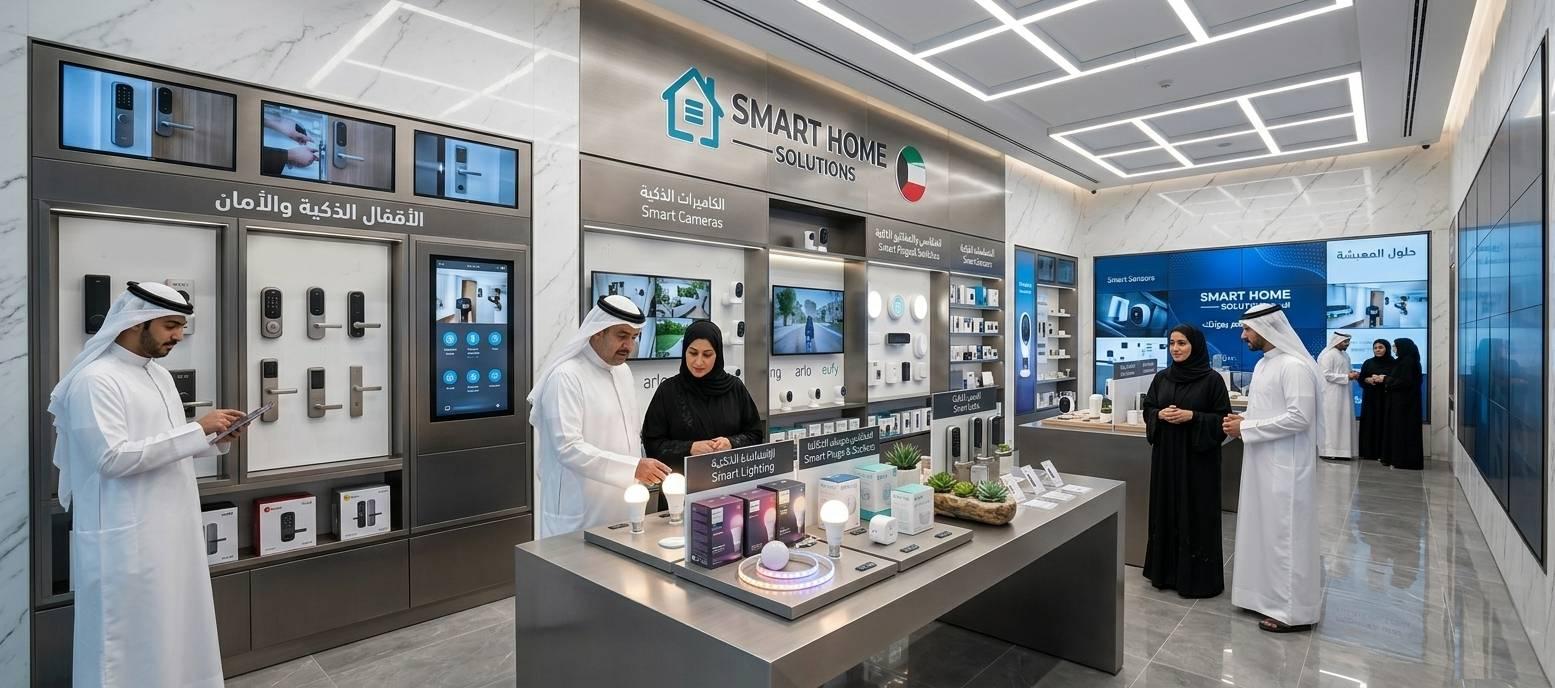
home security systems market hit USD 708.9 million in 2026 – and it’s on track to double, reaching USD 1.52 billion by 2034 (IMARC Group). That’s not a trend. That’s a signal.
smart home security system is not just a luxury upgrade. It’s your first line of defense.
What Is Smart Home Security?
Smart home security is an integrated network of connected devices – cameras, sensors, locks, and alarms – that you control from your smartphone, in real time, from anywhere in the world.
For a closer look at how these systems are actually applied in real homes, you can explore smart home security solutions designed for Gulf environments.
Unlike traditional security systems that relied on basic alarms and manual monitoring, smart security systems are:
- Always connected – via Wi-Fi, Zigbee, or Z-Wave protocols
- AI-powered – detecting unusual behavior, not just motion
- App-controlled – giving you live access whether you’re in the next room or on a flight to London
- Automated – responding to threats without you lifting a finger
Think of it this way: traditional security records what happened. Smart home security prevents it from happening.
Key Components of a Smart Home Security System
1. Smart Cameras :
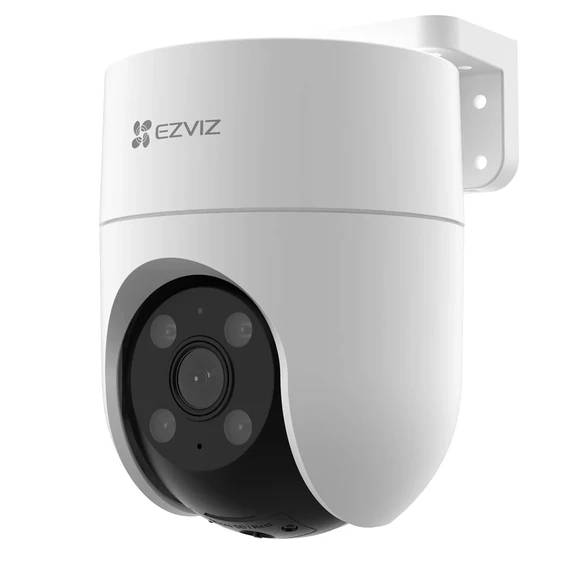
The backbone of any solid system. Modern smart cameras offer:
- 4K resolution with night vision
- AI-powered motion detection that distinguishes what in the scene a person, or a cat!
- Two-way audio – speak directly through the camera to whoever’s at your door
- Cloud or local storage for footage
If You’re traveling to Cairo for a week. Your villa’s outdoor camera detects an unrecognized face lingering near the gate at 11 PM. Your phone buzzes instantly. You see the live feed, speak through the camera – so that the person walks away.
According to a 2024 Statista market study cited by SmartTechBase, AI-driven surveillance systems have reduced false alarms by up to 90%, meaning fewer panic moments over a delivery driver or a neighborhood cat.
2. Smart Locks:
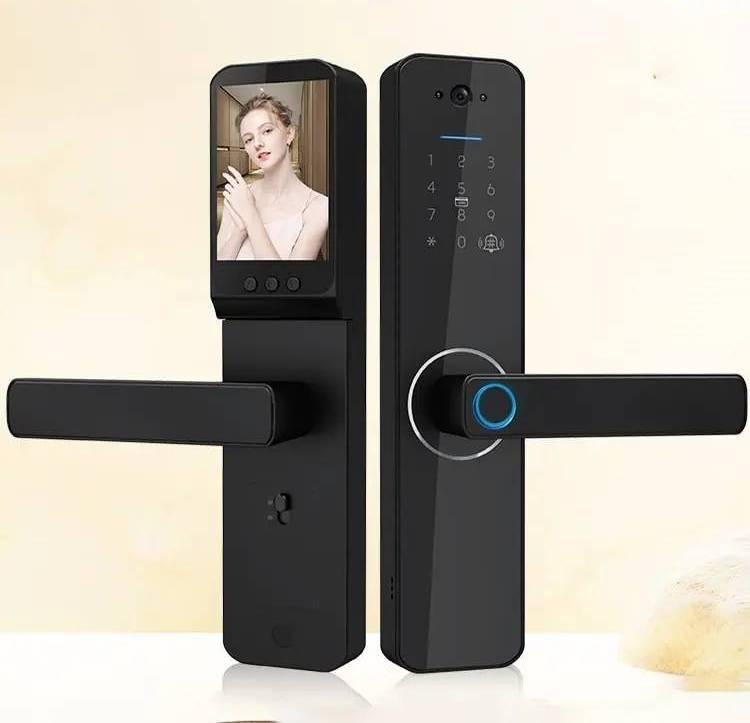
A smart lock replaces or upgrades your traditional deadbolt with digital control. Features include:
- PIN codes, fingerprint access, or facial recognition entry
- Temporary access codes for cleaners, guests, or service technicians – that expire automatically
- Real-time alerts every time your door is locked or unlocked
If Your children arrive home from school while you’re still at the office. You get a notification: “Front door unlocked – 2:15 PM.” You confirm they’re home safely without making a single call.
3. Motion Sensors:
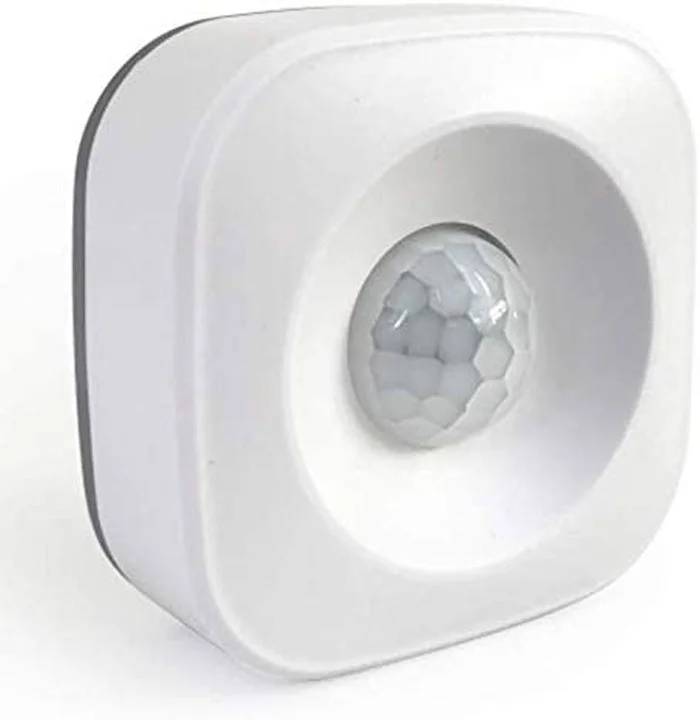
Placed at entry points, hallways, and perimeters, motion sensors:
- Trigger cameras and alarms only when needed
- Integrate with smart lighting (sudden lights = powerful deterrent)
- Detect glass breaking, doors opening, or unusual vibrations
When paired with AI systems, Smart sensors filter noise from real threats – drastically cutting false alarms.
4. Smart Alarm Systems:
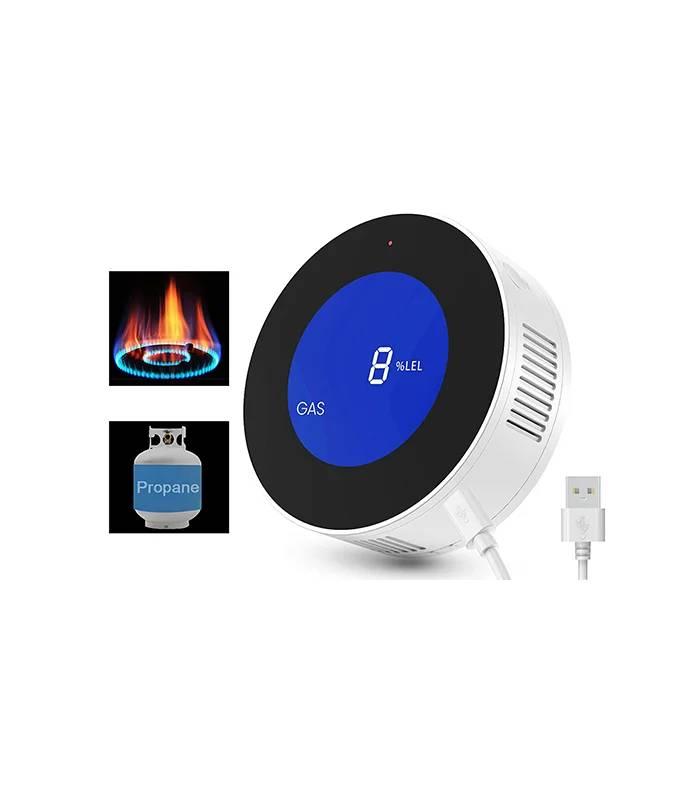
Modern smart alarms do more than make noise:
- Instantly notify you AND a professional monitoring center
- Automatically contact local authorities when triggered
- Distinguish between smoke, CO2, water leaks, and intruder entry
- Send alerts even if Wi-Fi is cut (cellular backup)
5. Smart Doorbells:
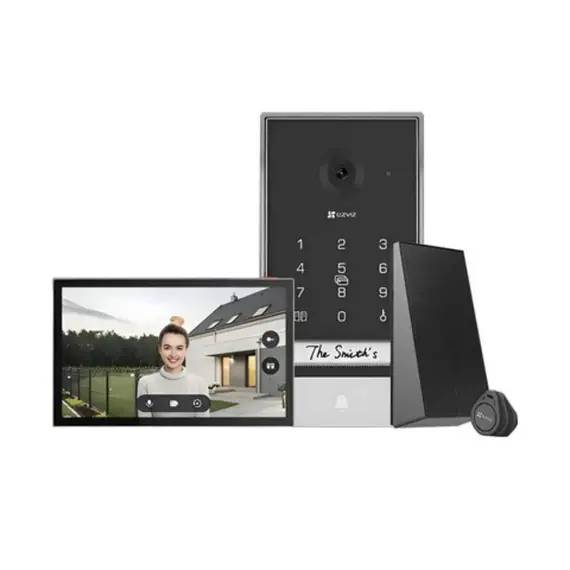
A camera, microphone, speaker, and motion detector – all in your doorbell. You see who’s there before they ring. You answer from anywhere. You deter porch theft before it happens.
6. Central Control Apps:
Every major smart security brand offers a smartphone app that serves as your command center:
- Live camera feeds on demand
- Push alerts with video clips attached
- Arming/disarming the system remotely
- Automation rules: “If motion detected after midnight → turn on outdoor lights + trigger alarm“
The Benefits of smart home system – Backed by Real Numbers
| Benefit | Proof |
|---|---|
| Crime deterrence | Homes with visible security systems see 60% fewer break-in attempts (Rutgers University, 37,000+ case study) |
| Faster threat response | Over 90% of triggered alarms result in immediate criminal flight (professional monitoring data) |
| Peace of mind | 96% of people feel safer when their neighborhood has visible cameras (U.S. News & World Report) |
| Reduced insurance costs | Smart security systems can reduce homeowners insurance premiums by 5–20% |
| AI accuracy | AI systems cut false alarms by up to 90% (Statista, 2024) |
| Property crime reduction | Areas with smart surveillance report 15–25% drops in property crime (SmartTechBase, 2025) |
Smart Home Security vs. Traditional Security: The Real Comparison
| Feature | Traditional Security | Smart Home Security |
|---|---|---|
| Control | On-site, manual | Remote, real-time via smartphone |
| Monitoring | Scheduled patrols or basic CCTV | 24/7 AI-powered live monitoring |
| Response time | Minutes to hours | Instant push alert + automated response |
| False alarms | High – basic motion triggers | Low – AI filters human vs. non-human |
| Cost | High ongoing labor costs | One-time hardware + optional subscription |
| Scalability | Difficult to expand | Add devices anytime, seamlessly |
| Proof of incidents | Often missing or low-quality footage | HD video with AI tagging + timestamps |
| Effectiveness | Reactive – documents crime | Proactive – prevents crime |
Bottom line: Traditional security reacts. Smart home security anticipates.
Is Smart Home Security Worth It in the Gulf?
Yes – and the market data proves Gulf residents already know it.
The entire Middle East smart home market is expected to grow from USD 10.28 billion in 2025 to USD 24.73 billion by 2030 (Mordor Intelligence).
Why is Gulf adoption accelerating faster than almost anywhere else?
1. Frequent international travel. Gulf families travel often – for business, Umrah, vacations. Remote monitoring isn’t optional for a family leaving a furnished villa for three weeks.
2. Villa and compound living. Large floor plans, multiple entry points, external gardens, and driver/helper quarters create security blind spots that traditional alarms simply can’t cover.
3. High-value assets. Luxury vehicles, jewelry, and electronics make Gulf households premium targets. Smart locks and cameras act as visible deterrents.
4. Domestic workers and service access. Smart locks with temporary PIN codes mean your cleaning crew can access the property at a set time — and that access expires automatically. No key copying. No risk.
What’s the Best Smart Home Security System?
There’s no single “best.” The right system depends on your home type, budget, and priorities. Here’s what the Gulf market actually uses:
- For villas with complex layouts:
Advanced, professionally installed systems are ideal for managing large spaces, outdoor perimeters, and multi-level automation – ensuring full control, security, and seamless integration across the entire property.
- For apartments and smaller homes:
Compact, easy-to-install smart devices offer a practical entry point into home automation, with intuitive apps and flexible controls that don’t require technical expertise.
- For premium, fully integrated smart homes:
High-end ecosystems provide complete automation – combining security, climate control, lighting, and remote monitoring into one unified experience.
we carefully select and provide smart home solutions tailored to each home type – whether you’re looking for a simple setup or a fully integrated smart living experience.
Key rule: Whatever system you choose, make sure it has:
✔️ End-to-end encryption
✔️ Cellular backup (not Wi-Fi only)
✔️ 24/7 professional monitoring option
✔️ Arabic-language app support or Gulf-based customer service
Can You Install Smart home security system Yourself?
Yes – for most modern systems.
The rise of DIY smart security is real. According to SafeHome.org’s 2026 Market Report, DIY installation has overtaken professional installation for the first time, with 49% of alarm users installing their own systems vs. 42% using a professional.
That said:
- DIY works well for: apartments, smaller homes, supplementary cameras, video doorbells
- Professional installation is better for: large villas, hardwired systems, perimeter setups, integrated alarm systems
In reality, the real value isn’t in the device itself only – it’s in how well it’s installed and integrated.
That’s why many homeowners prefer working with specialized smart home providers that offer complete solutions, installation, and after-sales support to ensure everything works seamlessly from day one.
That’s why trusted smart home stores with proven experience go beyond selling products, offering expert smart devices installation services as part of a complete after-sales experience – ensuring reliability, performance, and peace of mind from day one.
5 Mistakes Homeowners Make With Home Security
- Relying only on the compound’s perimeter security. External gates stop most threats. Your front door stops the rest. Your interior doesn’t get a second chance.
- Buying cameras without cloud or local backup. If a camera is stolen or damaged, footage stored only on the device is gone. Always use cloud backup or a local NVR/DVR.
- Skipping smart locks. Physical keys can be copied. Smart locks can’t.
- Ignoring Wi-Fi security. Your smart home is only as secure as your network. Use a separate IoT VLAN or at minimum a dedicated Wi-Fi band for security devices.
- Not testing the system. Set it up. Test every sensor. Know your response time.
FAQ: Smart Home Security system
Q: Is smart home security worth it for apartments ?
Absolutely. Even a basic setup – smart lock, video doorbell, one indoor camera – dramatically raises your security posture. You control access, monitor your home remotely, and create a digital log of every entry. For apartments, DIY systems from TP-Link Tapo or Ring are cost-effective and require zero professional installation.
Q: How much does a smart home security system cost?
Entry-level DIY smart security setups – such as two cameras and a smart doorbell – typically start from $130 to $400.
Mid-range systems for larger homes – including 6 to 8 cameras, smart locks, and alarm integration – usually range between $800 and $2,100, depending on the level of coverage and automation required.
Premium, professionally installed and monitored systems can go significantly higher based on customization and property size.
Q: Can smart home security cameras work without the internet?
Yes – with local storage (NVR/DVR). Many systems record locally to a hard drive even when the internet is down. However, remote monitoring and push alerts require an active internet connection. Systems with cellular backup maintain monitoring even if your home Wi-Fi is cut.
Q: Are smart home security systems hackable?
Any connected device carries cyber risk. Mitigation steps: choose brands with end-to-end encryption, enable two-factor authentication on your security app, use strong unique passwords, update firmware regularly, and keep security devices on a separate Wi-Fi network. Never use default passwords – ever.
Q: Do smart home security systems work with Arabic interfaces?
Most major brands offer Arabic language interfaces in their apps. Local Gulf distributors and installers can configure systems with Arabic support. Always verify language support before purchase.
Protect Your Home – Before You Need To
Smart home security isn’t about fear. It’s about control.
Control over who enters your property. Control over what happens when you’re not there. Control over the evidence if something goes wrong. And complete peace of mind whether you’re at home, at the office, or 5,000 km away.
The region is moving fast. security and access control segment is the single fastest-growing smart home category in the Kingdom. Your neighbors are already making the switch.
→ Start with a free home security assessment from a certified installer in your area.
→ Explore smart home security solutions tailored for Gulf villas and apartments.
→ Don’t wait for a security incident to take action — protect what matters today.
References & Sources
- IMARC Group — Saudi Arabia Home Security Systems Market Size (2025–2034): https://www.imarcgroup.com/saudi-arabia-home-security-systems-market
- Mordor Intelligence — Middle East Smart Home Market (2025–2030): https://www.mordorintelligence.com/industry-reports/middle-east-smart-home-market
- Grand View Research — Saudi Arabia Smart Home Market CAGR 2025–2030: https://www.grandviewresearch.com/horizon/outlook/smart-home-market/saudi-arabia
- ConsumerAffairs — Home Security Statistics 2026: https://www.consumeraffairs.com/homeowners/home-security-statistics.html
- SmartTechBase — Smart Home Security Trends 2025: https://smarttechbase.com/smart-home-security-trends-2025/
- Rutgers University — Burglar alarm deterrence study (via Moore Protection LA): https://www.mooreprotection.net/blog/burglar-alarms/do-home-security-systems-deter-burglars-research/
- SafeHome.org — 2026 Home Security Market Report: https://www.safehome.org/resources/home-security-industry-annual/
- Statista — Saudi Arabia Smart Home Security Forecast: https://www.statista.com/outlook/cmo/smart-home/security/saudi-arabia
Here’s the reality nobody talks about: 60% of convicted burglars say they would immediately abandon a target if they spotted a visible alarm or camera (ConsumerAffairs, 2024). A Department of Justice analysis found that homes without security systems are 2.7 times more likely to be burglarized than those that have them.